
Democrats are becoming increasingly confident they could regain control of the Senate in the upcoming midterm elections — a goal that seemed highly unlikely when President Donald Trump began his second term.
The political landscape still favors Republicans in many ways. Democrats would need to win Senate races in at least five states Trump carried in 2024 in order to reclaim the chamber. But declining approval ratings for Trump and growing economic concerns tied to the war in Iran have created new optimism within the party as Election Day approaches.
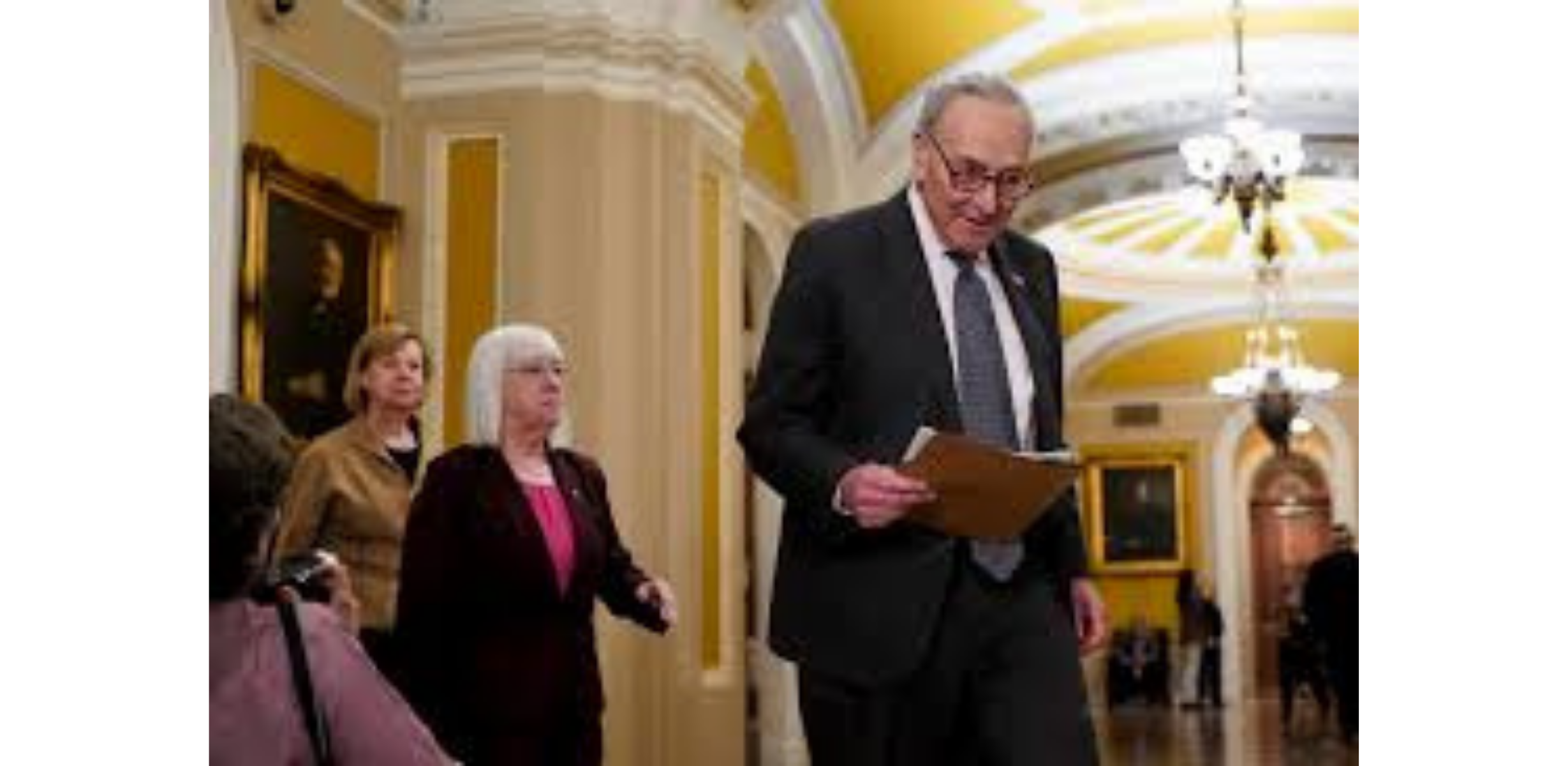
Senate Minority Leader Chuck Schumer said he believes Democrats now have a realistic path to victory, pointing to Trump’s political struggles and what he sees as strong Democratic candidates in several Republican-leaning states.
“Last year, most people thought taking back the Senate was impossible,” Schumer said. “I believed otherwise, and the strategy we put in place is starting to pay off.”
For much of the year, Democrats focused more heavily on retaking the House of Representatives, where fewer seats need to change hands. But Trump’s worsening poll numbers have made Senate Republicans appear increasingly vulnerable as well.
Recent national polling has shown Trump’s approval ratings sinking to some of the lowest levels of his presidency, particularly on economic issues and inflation — topics expected to dominate the midterm campaigns. Democratic strategists say the political climate resembles 2006, when opposition to the Iraq War helped Democrats unexpectedly flip the Senate during George W. Bush’s presidency.
“There’s an unpopular president, a controversial war, and a difficult Senate map,” said J.B. Poersch, president of Senate Majority PAC, the leading Democratic Senate super PAC. “That’s very similar to 2006, when Democrats managed to win despite long odds.”
Some conservative groups have also begun warning Republicans about the possibility of losing control of the chamber. Republicans currently hold a 53-47 Senate majority.
Still, Democrats face significant challenges. Republicans maintain a major financial advantage through well-funded super PACs, and Democrats are also dealing with competitive primaries in several important states, particularly Michigan.
Republicans remain publicly confident. Sen. Tim Scott of South Carolina, who chairs the National Republican Senatorial Committee, argued that improving gas prices and Republican legislative achievements could strengthen GOP candidates before November.
The Democratic strategy depends on holding all of their current Senate seats — including difficult states such as Michigan and Georgia — while flipping at least four Republican-held seats. Party leaders view Maine, North Carolina, Ohio, and Alaska as their best pickup opportunities.
Democrats are also watching potential openings in Iowa and Texas. In Texas, Democratic state Rep. James Talarico has emerged as a surprisingly strong fundraiser and could benefit from a divisive Republican primary battle between Sen. John Cornyn and Attorney General Ken Paxton.
At the same time, Democrats are confronting internal divisions in several races. Michigan’s crowded Democratic primary has become particularly tense, with competing factions backing different candidates. Party leaders worry that a bruising contest could weaken the eventual nominee heading into the general election.
Republicans, meanwhile, have largely unified around candidates in key battleground states and continue to hold a sizable fundraising edge overall. Senate Leadership Fund, the top Republican Senate super PAC, had more than twice as much cash on hand as its Democratic counterpart earlier this year.
Trump-aligned groups also possess hundreds of millions of dollars that could be directed into Senate races later in the campaign.
Despite that imbalance, Democratic candidates themselves have raised substantial sums in several important contests. In Georgia, Sen. Jon Ossoff has built a massive fundraising advantage over potential Republican challengers. In North Carolina, former Democratic governor Roy Cooper has also significantly outraised Republican candidate Michael Whatley.
Democrats argue they do not need to match Republican spending dollar-for-dollar if the national political environment continues moving against Trump.
Schumer acknowledged Republicans’ financial edge but insisted the broader political mood favors Democrats heading into the election.
“We may not have as much money,” he said, “but the atmosphere right now is strongly anti-Trump, and that changes the equation.”