
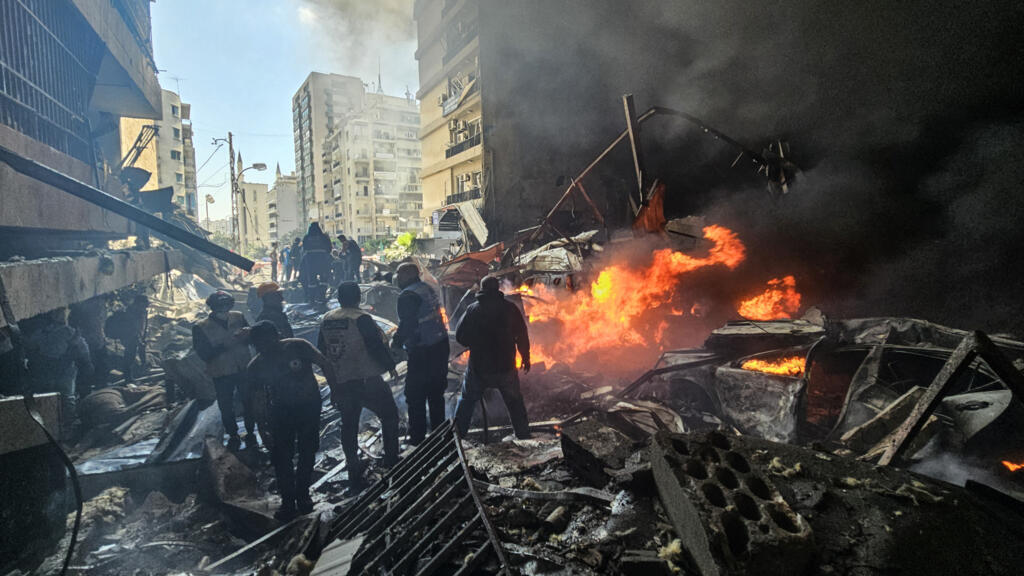
A Washington Post investigation found that Israeli airstrikes on April 8 hit several neighborhoods in central Beirut without prior evacuation warnings, killing dozens of people in areas where many civilians had sought refuge from earlier bombardments.
That morning, the Israel Defense Forces (IDF) issued public evacuation alerts for parts of Beirut’s southern suburbs, warning residents that military operations targeting Hezbollah were imminent. More than two hours later, Israeli strikes began hitting those southern districts. However, according to the Post’s visual analysis of videos and strike locations, attacks also occurred in at least five neighborhoods in central Beirut that had received no warning.
The strikes reached areas up to two miles away from the evacuation zones, including Corniche al-Mazraa, a busy commercial district. Lebanese Civil Defense reported that while 61 people were killed in the southern suburbs, more than 90 others died in central Beirut.
Residents described scenes of panic and devastation. Abir, a grocery store owner in Corniche al-Mazraa, said there had been no indication the area would be targeted. “There was no warning at all,” she said. “There were so many civilian casualties that we could not count.”
In response to questions from The Washington Post, the IDF confirmed striking five of the seven central Beirut sites identified through video and photographic evidence. Israeli officials said the attacks targeted Hezbollah infrastructure, including command centers, and killed Ali Yusuf Harshi, identified as a security adviser to Hezbollah’s leader.
The IDF argued that advance warnings were not issued for those strikes because doing so could have allowed targets to escape. Israeli officials also said precision-guided munitions were used in an effort to reduce civilian casualties and maintained that civilians were not intentionally targeted.
The April 8 attacks became the deadliest day in the conflict between Israel and Hezbollah since fighting escalated in early March. Lebanese authorities later reported a nationwide death toll of 357 people from that day’s strikes, including many women, children, and elderly civilians. Israel said more than 250 of those killed were Hezbollah members.
The bombardment marked a major escalation in Beirut itself. Several of the targeted central neighborhoods had largely avoided heavy Israeli strikes in previous conflicts and had become shelters for people displaced from southern Lebanon and Hezbollah-controlled suburbs.
Witnesses described widespread destruction. In Corniche al-Mazraa, multiple explosions struck near businesses, homes, and crowded streets. Surveillance footage reviewed by weapons experts suggested some strikes involved 2,000-pound bombs fitted with U.S.-made Joint Direct Attack Munition (JDAM) guidance kits.
One strike devastated an area near an Al Rifai confectionery store, killing employee Nader Khalil, who had previously fled the southern suburbs seeking safety in central Beirut. His brother said the family was now considering moving farther north to Tripoli after being displaced a second time.
Another strike hit Beirut’s upscale Tallet el-Khayat neighborhood, collapsing part of a 10-story apartment building. Weapons analysts said the damage appeared consistent with a large precision-guided bomb. Among those killed were Lebanese poet Khartoun Ibrahim Salma and her husband.
Additional strikes occurred near the residence of Parliament Speaker Nabih Berri, a Hezbollah ally and key intermediary in negotiations involving the group. Analysts reviewing footage suggested smaller precision-guided bombs may have been used in some of those attacks.
The Lebanese government later filed a complaint with the United Nations Security Council, accusing Israel of striking densely populated civilian areas during peak hours without warning and causing large-scale civilian casualties.
For survivors, the attacks left lasting trauma. Kamel Ismail, who was injured while sitting in his car during one of the strikes, described believing he was about to die as explosions erupted around him.
“I feel like I looked death in the eyes,” he said. “Everything people built over their lifetimes was destroyed within minutes.”